Leon Braun · 7 October 2026
Tracing Family Histories Through Patterns in Old Linen Tablecloths and Bedding
Old linen tablecloths and bedding carry woven and embroidered patterns that often encode ownership details, regional origins, and generational connections, allowing researchers to reconstruct family lineages when traditional records fall short. These textiles feature monograms, crests, and symbolic motifs that date back centuries, with many pieces preserved in private collections and institutional archives across Europe and North America.
Historical Context of Linen Patterns
Linen production flourished in regions such as Flanders, Ireland, and parts of Eastern Europe during the 18th and 19th centuries, where weavers incorporated specific thread counts and damask designs that corresponded to local guilds and family workshops. Observers note that household linens frequently received custom embroidery at the time of marriage or inheritance, creating durable markers that survived multiple generations and migrations.
Patterns varied by geography, with Scottish households favoring thistle motifs while Italian families used floral borders tied to specific provinces, and these distinctions help historians map migration routes when families relocated across borders. Data from textile inventories in museum holdings shows consistent use of alphanumeric codes alongside decorative elements, which sometimes reference birth years or estate names.
Identifying Symbols and Monograms
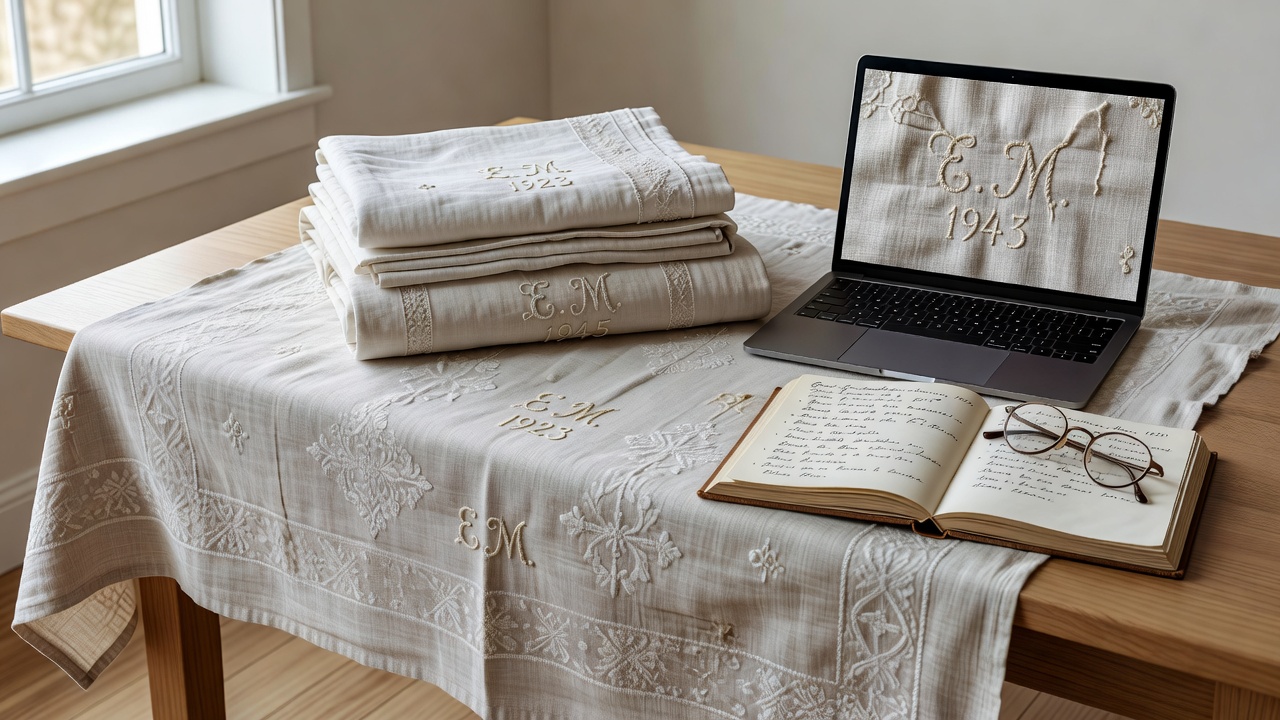
Monograms appear in intertwined letters that follow standardized alphabets developed by professional embroiderers, and cross-referencing these with parish registers or census data allows genealogists to confirm ownership. Researchers have catalogued common symbols such as anchors for maritime families or sheaves of wheat for agricultural lineages, turning each piece into a potential primary document.
Bed linens often include date stamps worked into corner designs, providing chronological anchors that align with known family events like weddings or inheritances. Those who study these artifacts point out that thread colors and dye compositions further narrow down production periods, since natural dyes shifted with trade routes and chemical innovations in the late 1800s.
Methods Used in Genealogical Research
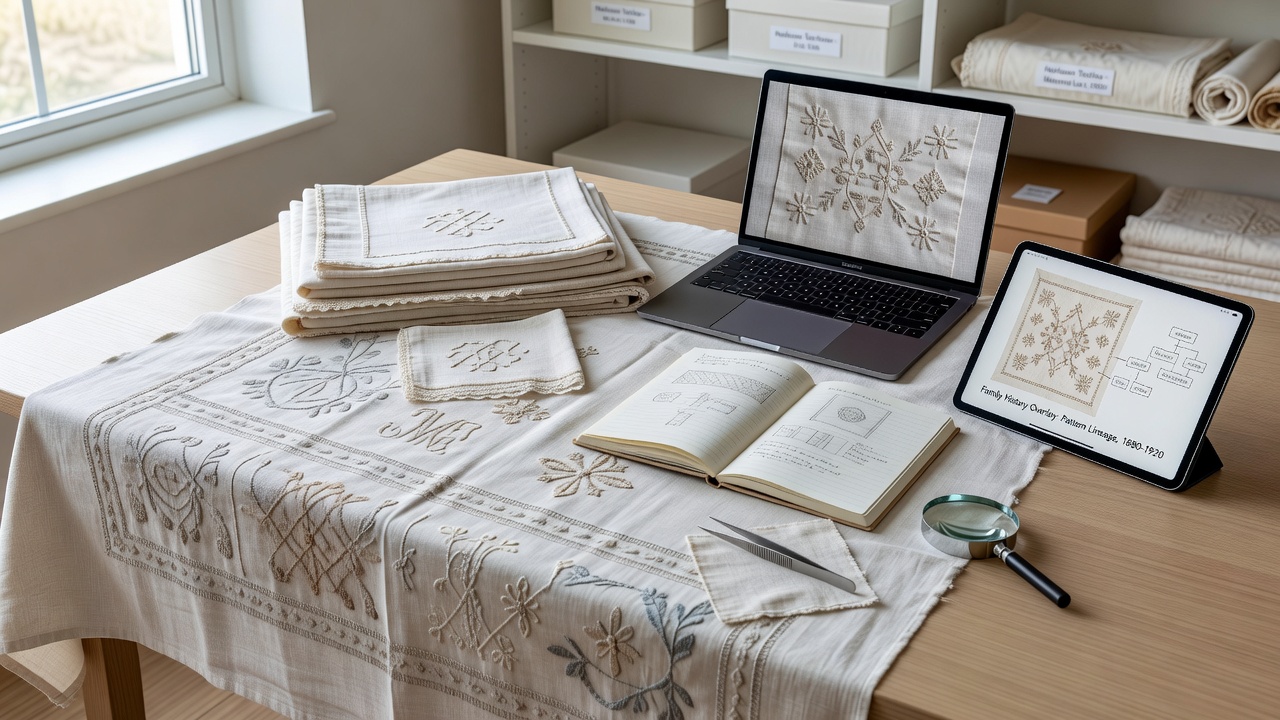
Genealogists begin by photographing patterns at high resolution and comparing them against databases maintained by cultural heritage organizations, while also examining stitch techniques that reveal whether pieces originated in domestic or commercial settings. Collaboration with textile conservators helps preserve fragile items during analysis, and digital scanning now enables remote matching against collections held in distant repositories.
One documented case involved a set of tablecloths from a Pennsylvania Dutch family that featured repeated eagle motifs; matching these to shipping manifests from 1840s Philadelphia confirmed the family's arrival port and connected previously separate branches of the lineage. Similar approaches have succeeded with Irish linens bearing harp symbols that traced back through famine-era emigration records.
Role of Institutional Collections and Digital Tools
Archives such as those maintained by the U.S. National Archives hold textile samples alongside related probate documents, facilitating cross-verification of pattern-based identifications. In Australia, the National Archives of Australia maintains records of imported household goods that sometimes include descriptions of marked linens arriving with settler families in the 19th century.
Academic studies from European universities have analyzed thread samples using spectrometry to date pieces more precisely, and results feed into shared platforms that genealogists access worldwide. What's interesting is how community groups now organize workshops where participants bring family linens for collective pattern analysis, accelerating identifications through shared expertise.
Current Developments in October 2026
Plans for October 2026 include expanded digitization projects at several heritage institutions that will add thousands of new linen images to public databases, incorporating metadata on pattern classifications developed through recent international collaborations. These updates aim to support researchers working on transatlantic family connections that rely on textile evidence.
Conclusion
Patterns preserved in old linens continue to serve as reliable sources for family history research when combined with documentary evidence and modern analytical techniques. Institutions and independent researchers alike contribute to growing knowledge in this field, with new tools scheduled to enhance access in the coming years.